
← Back
You are here:
Print
E3F-DS30C2 NPN Photoelectric Proximity Switch Sensor – Normally Closed User’s Guide
Last Updated On
0
0
Overview
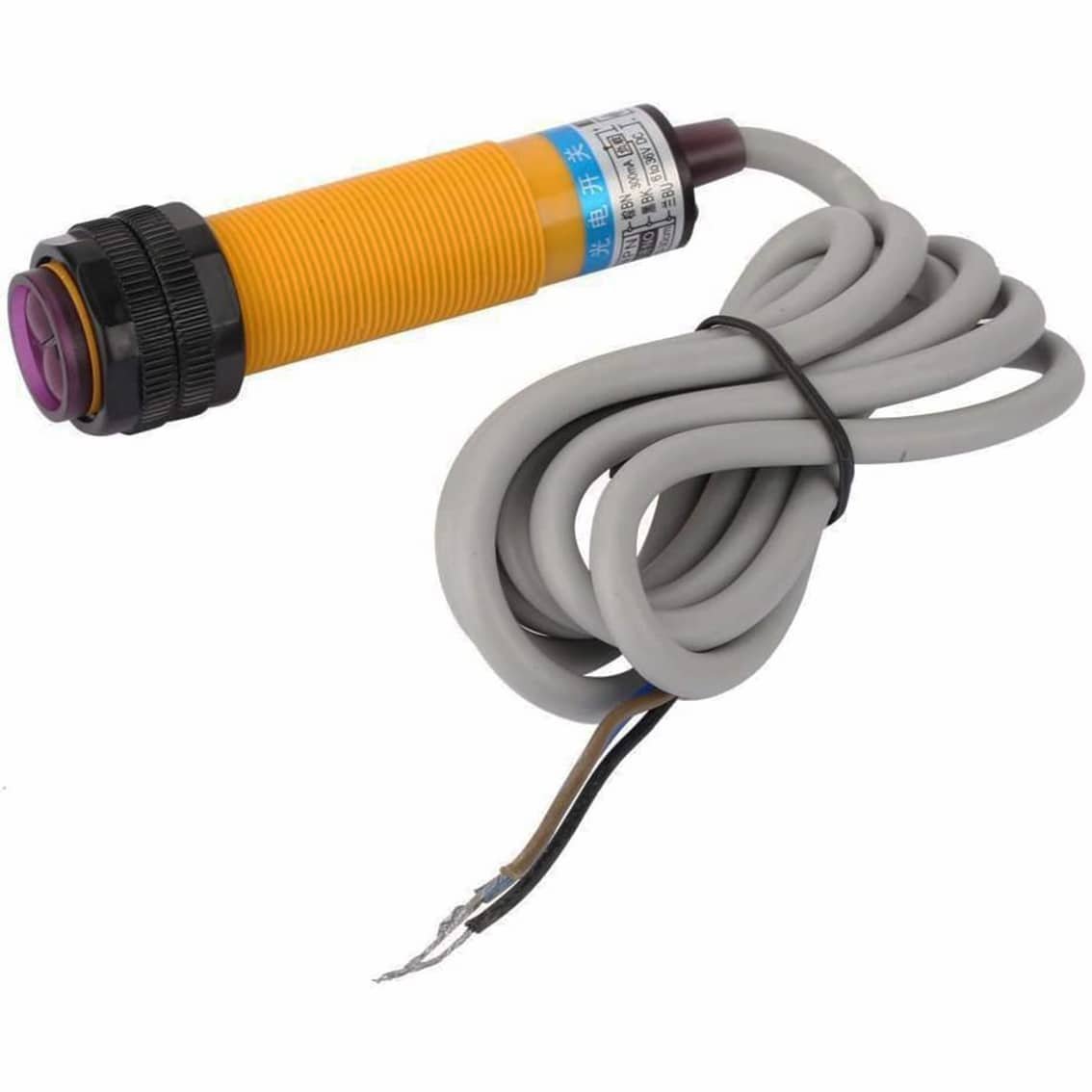
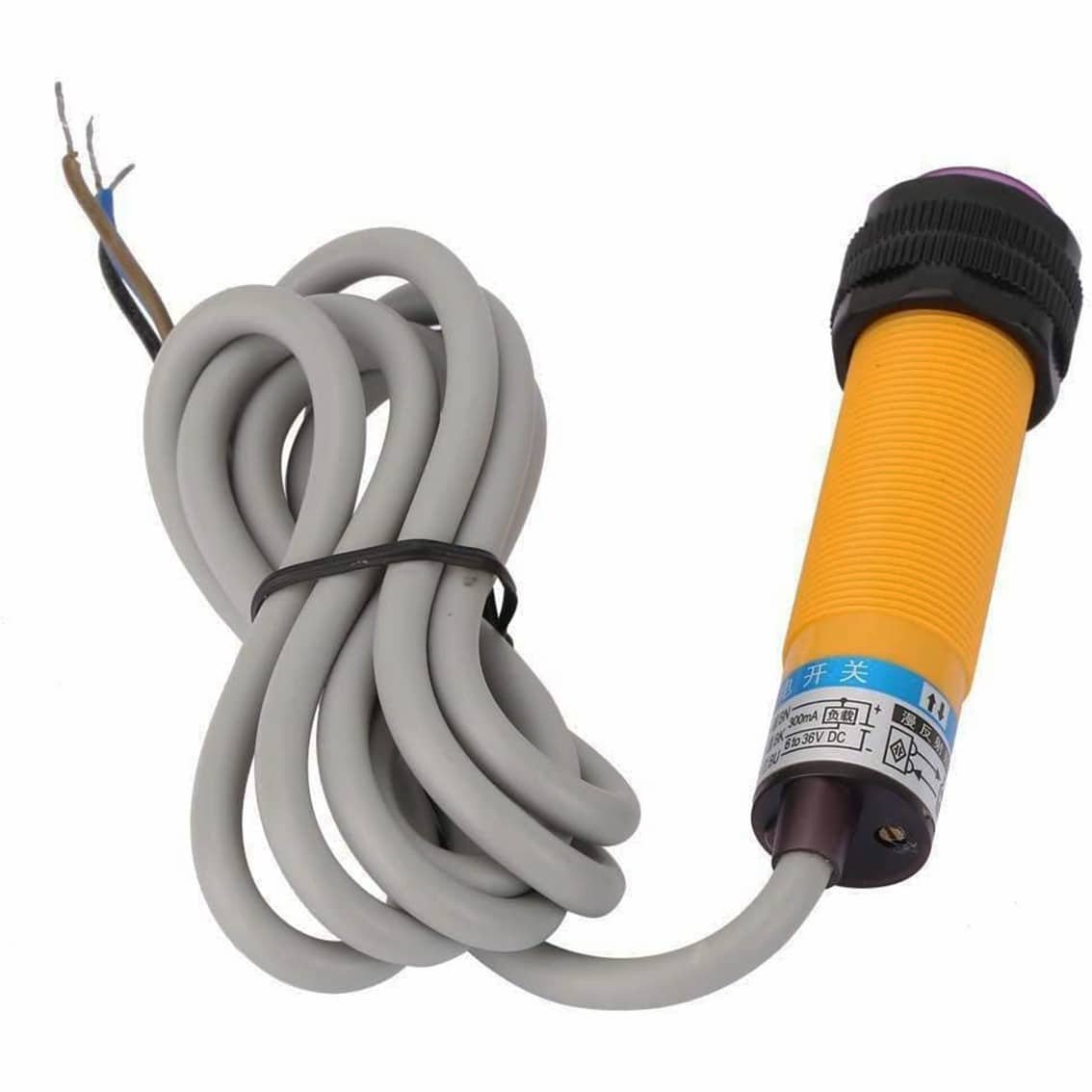
The E3F‑DS30C2 is a long‑range cylindrical photoelectric sensor designed for industrial automation. It detects objects using infrared light and provides an NPN output, Normally Closed (NC) configuration. This means the output is active (connected to ground) until an object is detected, at which point the circuit opens.
Specifications
- Model: E3F‑DS30C2
- Type: Photoelectric proximity switch
- Output: NPN, Normally Closed
- Sensing distance: ~30 cm (depending on target surface)
- Supply voltage: 6–36 V DC
- Wiring: 3‑wire (Brown = V+, Blue = GND, Black = Output)
- Body: Cylindrical, threaded, with adjustable sensitivity ring
Wiring Guide
| Wire Color | Connection | Function |
|---|---|---|
| Brown | +V (6–36 V DC) | Power supply positive |
| Blue | 0 V (Ground) | Power supply negative |
| Black | Output signal | Connect to controller input |
Note: Since it’s NPN NC, the black wire is normally pulled low (to ground). When an object is detected, the output opens (high impedance).
Installation
- Mounting: Secure the sensor using its threaded body and a bracket.
- Alignment: Point the lens toward the detection zone.
- Wiring: Connect wires to your PLC, Arduino, or relay module according to the table above.
- Adjustment: Rotate the black sensitivity ring to fine‑tune detection distance.
Operation
- No object detected → Output (black wire) is grounded (active).
- Object detected → Output opens (inactive).
- Use a pull‑up resistor or controller input to interpret the signal correctly.
Applications
- Long‑range object detection (up to 30 cm)
- Conveyor belt monitoring
- Position sensing in automated machinery
- DIY robotics and automation projects requiring extended sensing distance
Safety Notes
- Do not exceed 36 V DC supply.
- Avoid reflective surfaces that may cause false triggers.
- Insulate exposed wires to prevent shorts.
- Test sensor response before integrating into critical systems.
Table of Contents