
← Back
You are here:
Print
IR Infrared Obstacle Avoidance Sensor – E18-D80NK User’s Guide
Last Updated On
0
0
Overview
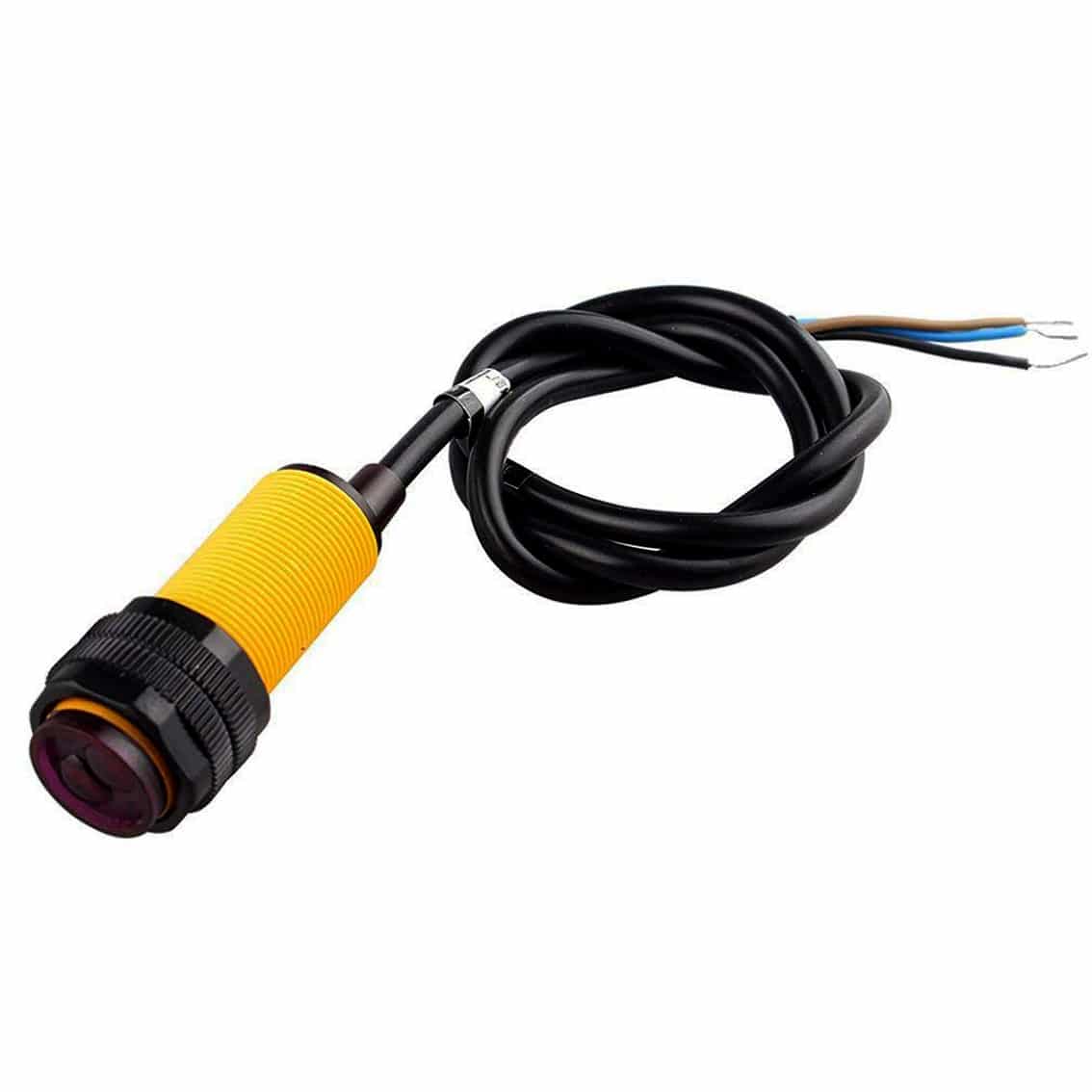
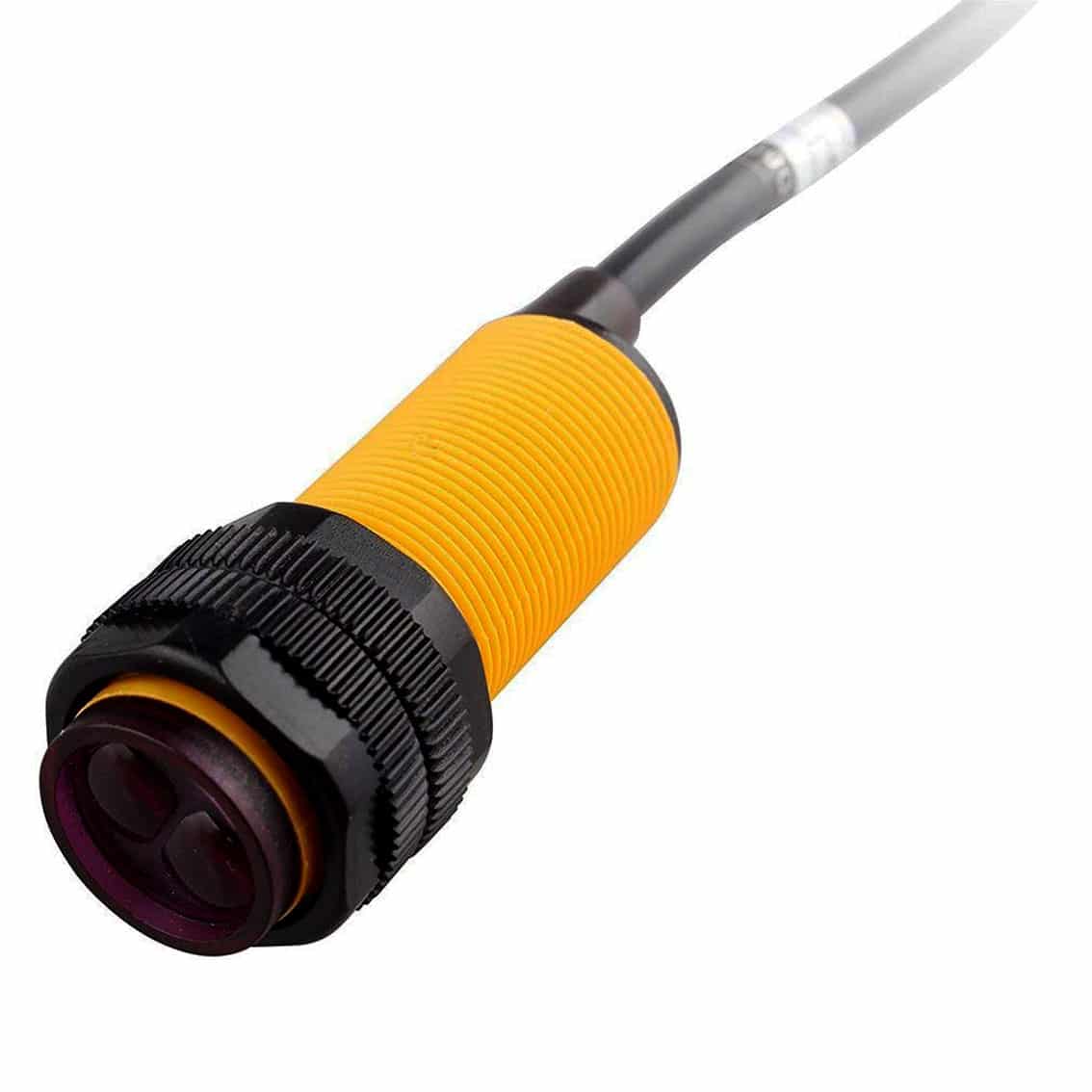
The E18‑D80NK is an infrared photoelectric sensor commonly used in robotics and automation projects for obstacle detection. It emits infrared light and detects reflections from nearby objects. This model is adjustable, allowing you to set the detection distance up to 80 cm.
Specifications
- Model: E18‑D80NK
- Type: Infrared obstacle avoidance sensor
- Detection range: 3–80 cm (adjustable via potentiometer)
- Supply voltage: 5V DC
- Output type: NPN, Normally Open (NO)
- Wiring: 3‑wire system (Brown = V+, Blue = GND, Black = Output)
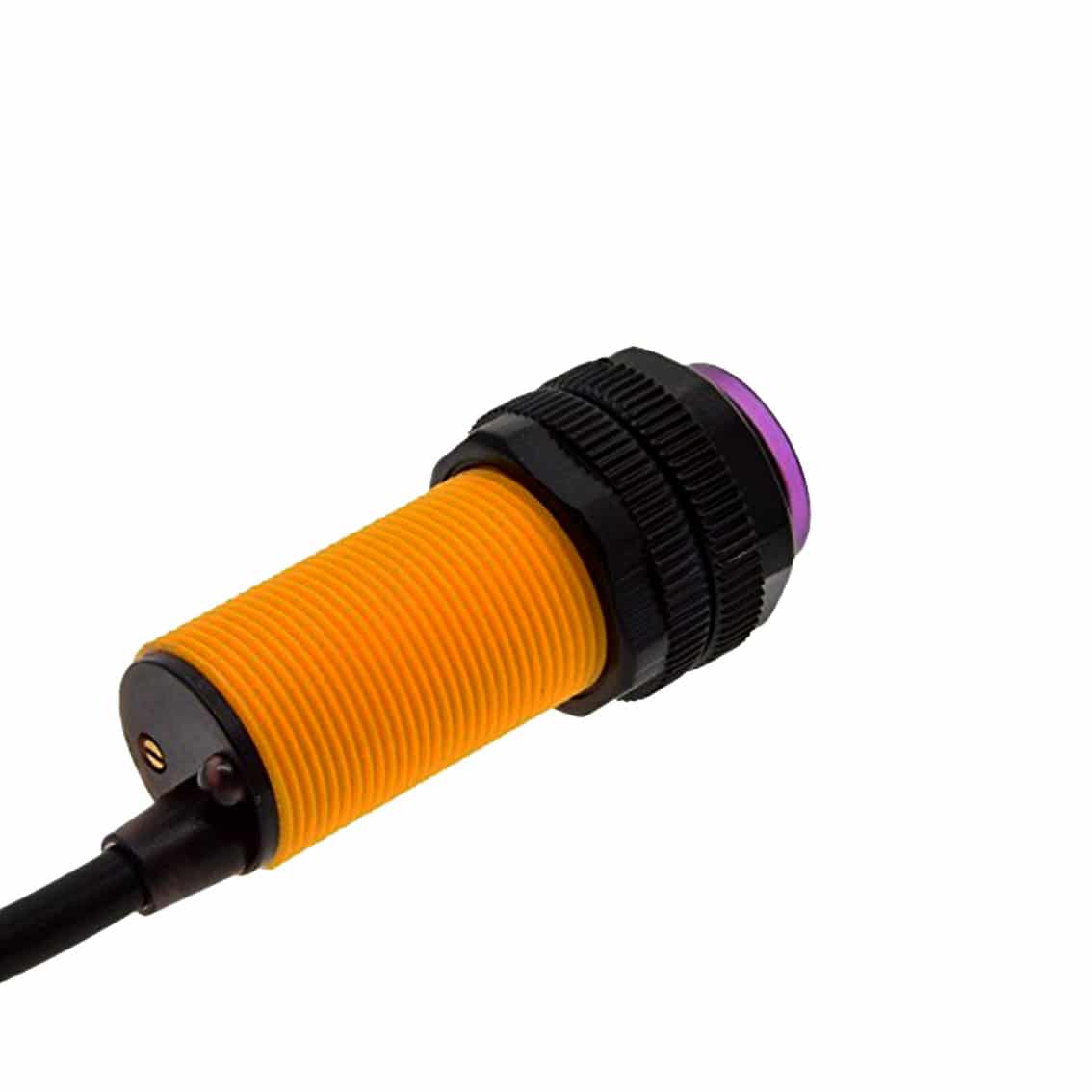
- Body: Cylindrical, threaded, with dual lenses (emitter and receiver)
Wiring Guide
| Wire Color | Connection | Function |
|---|---|---|
| Brown | +V (5 V DC) | Power supply positive |
| Blue | 0 V (Ground) | Power supply negative |
| Black | Output signal | Connect to controller input |
Note: The black wire outputs a low signal when an object is detected.
Installation
- Mounting: Secure the sensor using its threaded body and a bracket.
- Alignment: Aim the dual lenses toward the area where obstacles may appear.
- Wiring: Connect wires to your PLC, Arduino, or motor driver according to the table above.
- Adjustment: Use the built‑in potentiometer to set detection distance (closer or farther).
Operation
- No object detected → Output remains open (inactive).
- Object detected → Output closes, pulling the black wire low (active).
- Use a pull‑up resistor or controller input to interpret the signal correctly.
Applications
- Obstacle avoidance in mobile robots
- Object detection in conveyor systems
- Safety interlocks in automation setups
- DIY electronics projects requiring IR sensing
Safety Notes
- Ensure supply voltage stays within 5V DC.
- Avoid direct sunlight or highly reflective surfaces that may cause false triggers.
- Insulate exposed wires to prevent shorts.
- Test sensor response before integrating into critical systems.
Table of Contents