
← Back
You are here:
Print
NodeMCU-32S ESP-32S WiFi Bluetooth Development Board
Last Updated On
0
0
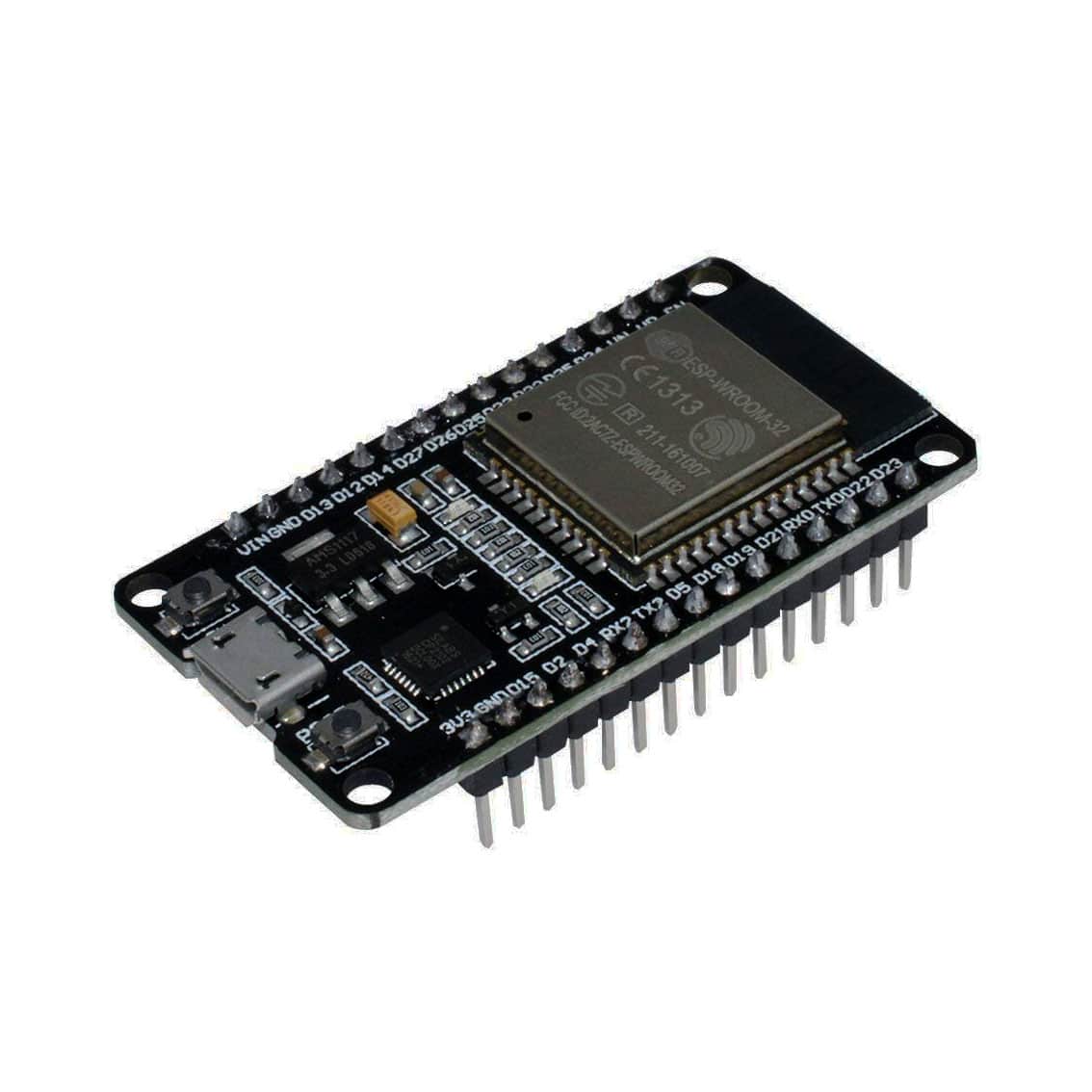
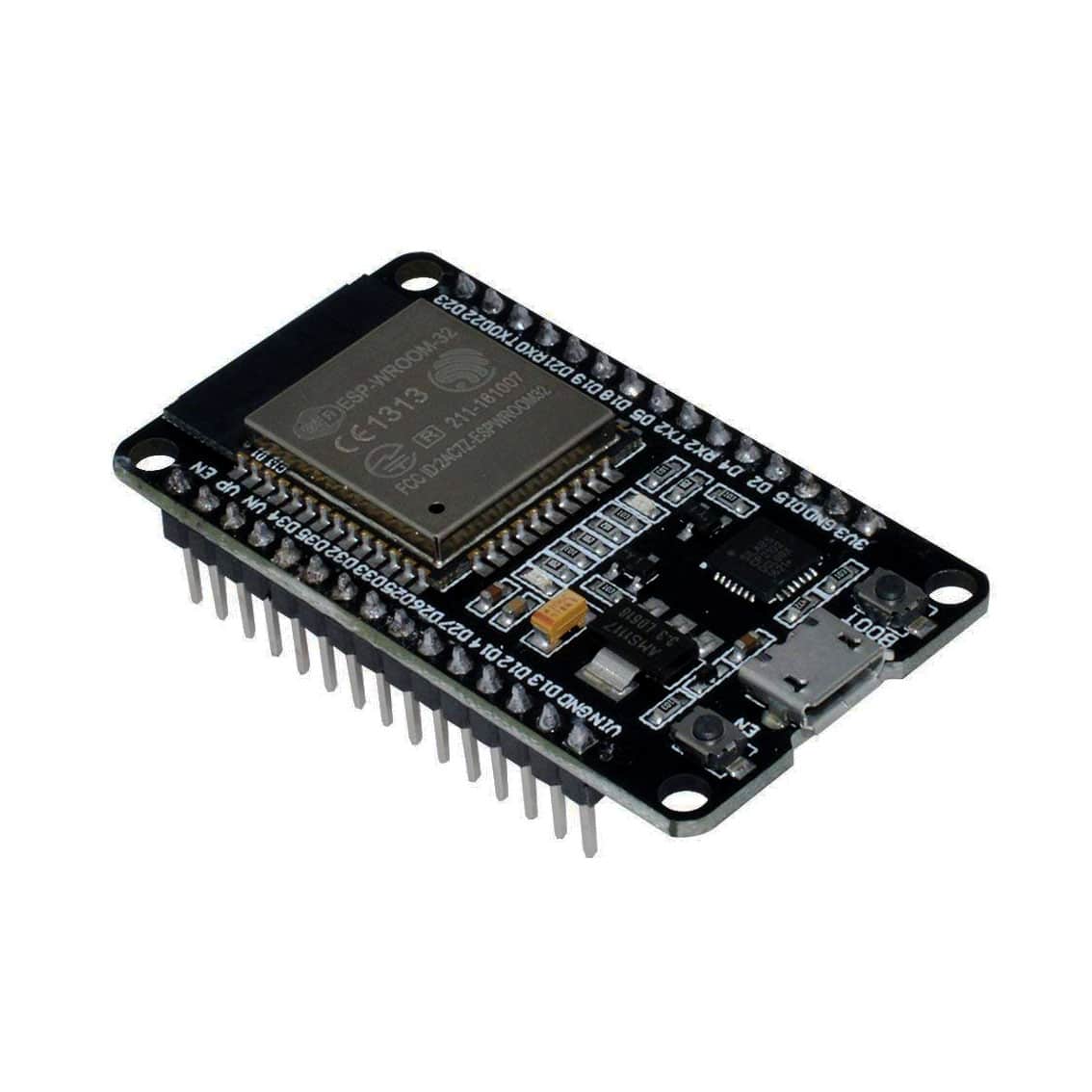
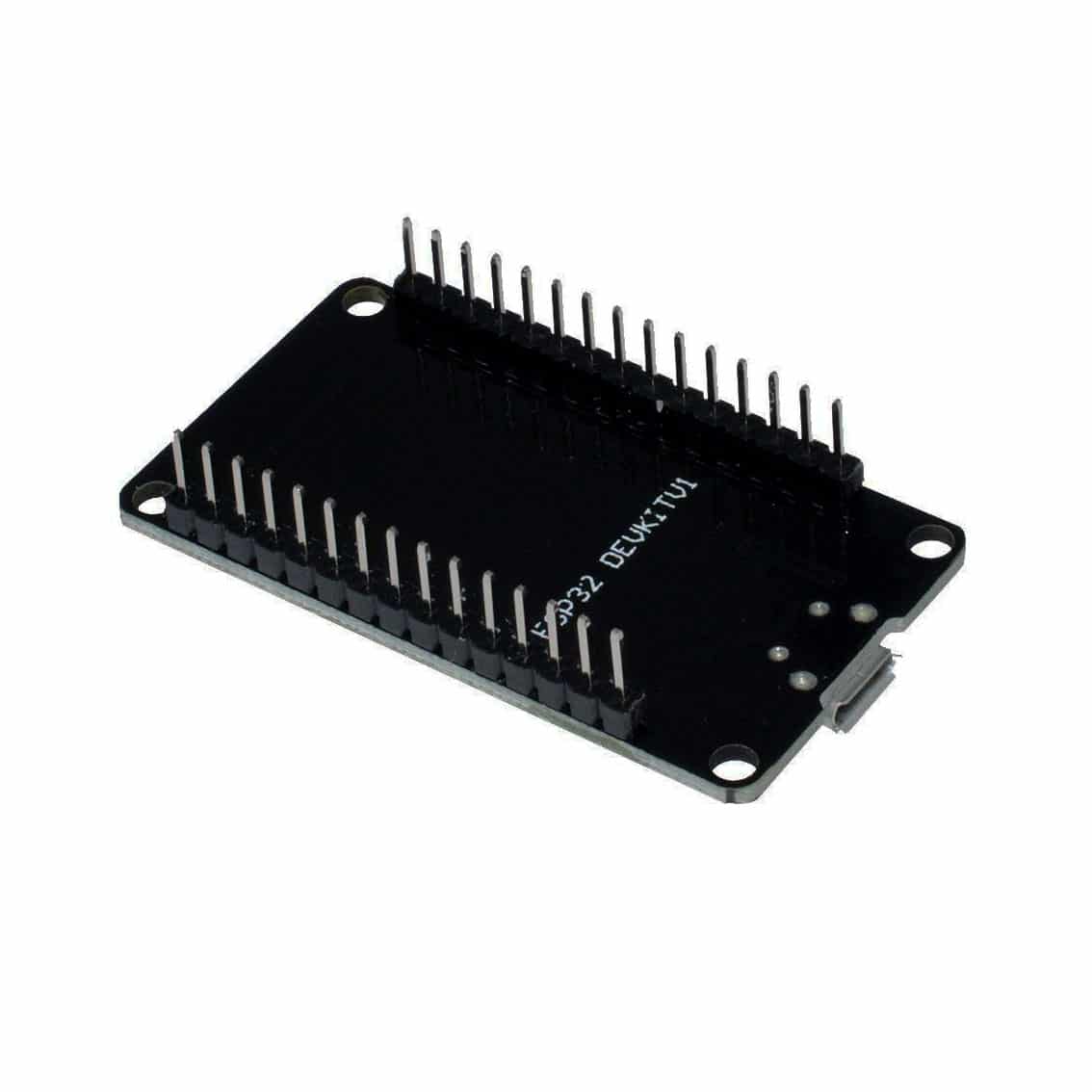
Product Overview
- Core Module: ESP‑WROOM‑32 (dual‑core Xtensa LX6, 240 MHz max)
- Connectivity: Wi‑Fi (802.11 b/g/n), Bluetooth Classic + BLE
- Memory: 520 KB SRAM, 4 MB Flash
- Interfaces: 34 GPIOs, ADC, DAC, SPI, I²C, UART, PWM, touch sensors
- USB Interface: Micro‑USB for power and programming
- Voltage: 3.3 V logic (5 V tolerant via onboard regulator)
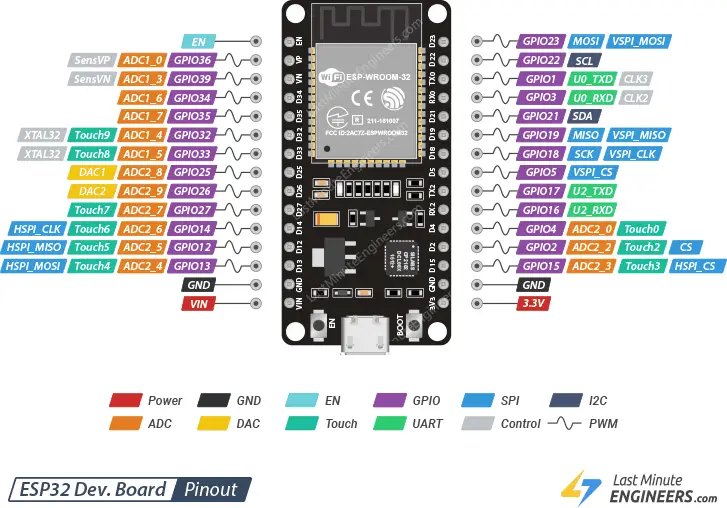
Pinout Diagram
Setup Instructions
- Install Arduino IDE
- Download from Arduino.cc.
- Add ESP32 board support: File → Preferences → Additional Board Manager URLs →
https://dl.espressif.com/dl/package_esp32_index.json
- Select Board
- Tools → Board → ESP32 Arduino → NodeMCU‑32S
- Drivers
- Install CP2102/CH340 USB‑to‑UART drivers (depending on your board revision).
- Power
- Connect via Micro‑USB (5 V input, onboard regulator outputs 3.3 V).
Example Code
Blink onboard LED (GPIO2):
cpp
void setup() {
  pinMode(2, OUTPUT);
}

void loop() {
  digitalWrite(2, HIGH);
  delay(1000);
  digitalWrite(2, LOW);
  delay(1000);
}
Upload via Arduino IDE → Upload button.
Key Pin Functions
| Pin | Function | Notes |
|---|---|---|
| GPIO0 | Boot mode | Used for flashing firmware |
| GPIO1/3 | UART TX/RX | Serial communication |
| GPIO2 | Onboard LED | Default blink pin |
| GPIO4, 5 | I²C SDA/SCL | Configurable |
| GPIO12–15 | SPI | MOSI, MISO, CLK, CS |
| GPIO34–39 | ADC inputs | Input only |
| EN | Enable | Reset/enable chip |
| VIN | 5 V input | From USB |
| 3V3 | 3.3 V output | Regulated |
Risks & Best Practices
- Voltage caution: GPIOs are 3.3 V only (avoid 5 V direct input).
- Boot strapping pins: GPIO0, GPIO2, GPIO15 affect boot mode—avoid using them for peripherals unless necessary.
- Power stability: Use a stable 5 V supply; brownouts cause resets.
- Heat: ESP32 can run hot under load; ensure ventilation.
Applications
- IoT sensors (Wi‑Fi + BLE)
- Smart home automation
- Robotics (motor drivers via PWM)
- Audio streaming (I²S DAC)
- Educational kits for embedded systems
Table of Contents