Phipps Electronics

Order within the next 

FREE SHIPPING OVER $199

50,000+ ORDERS

WORLDWIDE SHIPPING

SSL SECURED

Essential LED Characteristics

Contents

Trying to find info about LEDs you’ll use in your circuits? Find it all here in this LED characteristics tutorial.

Introduction

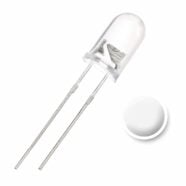
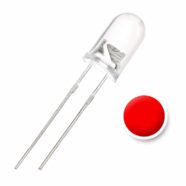
LEDs are the main components used for signal lighting in electronics. If you want to know if your module is powered on, you’ll usually use an LED. LEDs can also be used as a heartbeat or signaling element, telling you that your circuit is alive and producing output. However, each LED characteristic can be different in many ways. Here, you’ll find the essential characteristics of LEDs.

LED Characteristics

LED Color vs. Forward Voltage

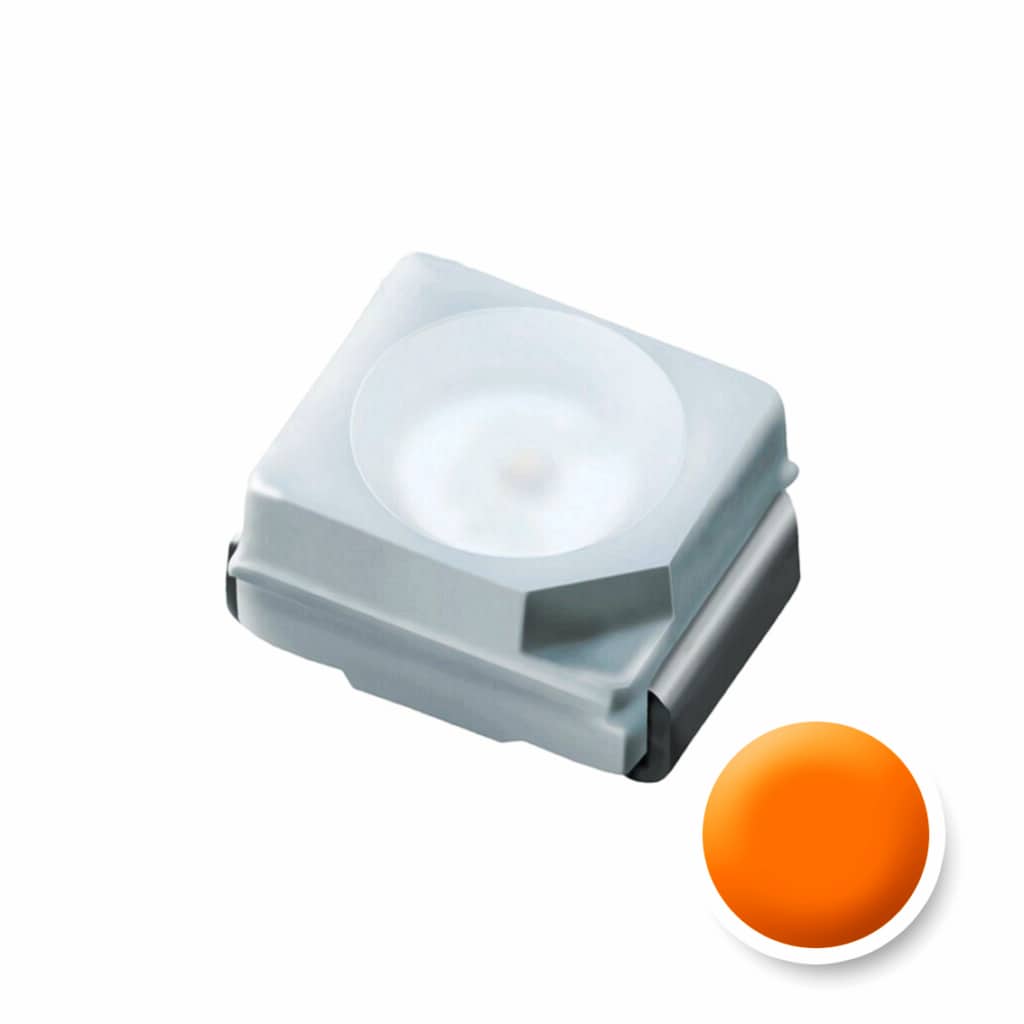
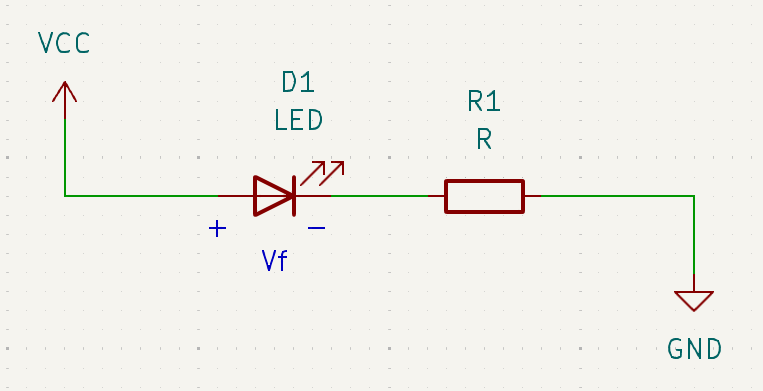
LED characteristics forward voltage

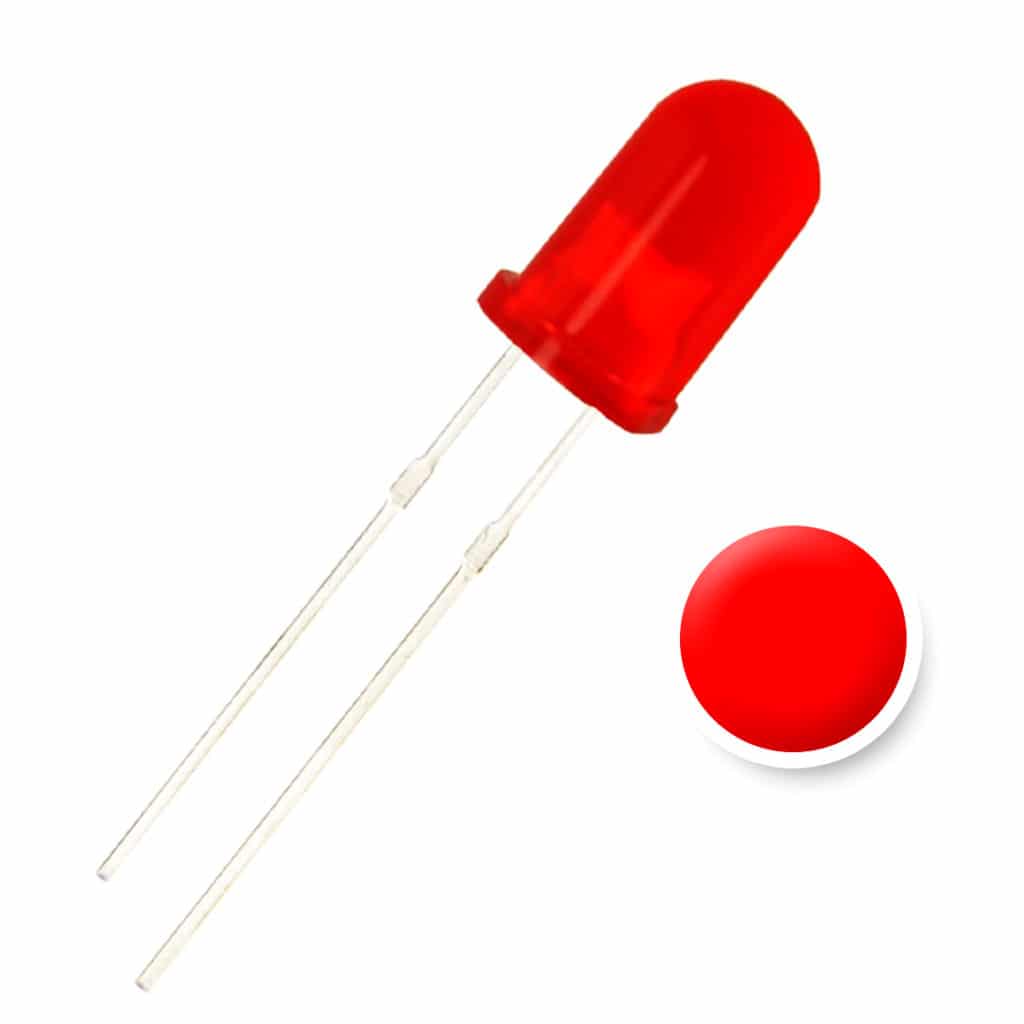
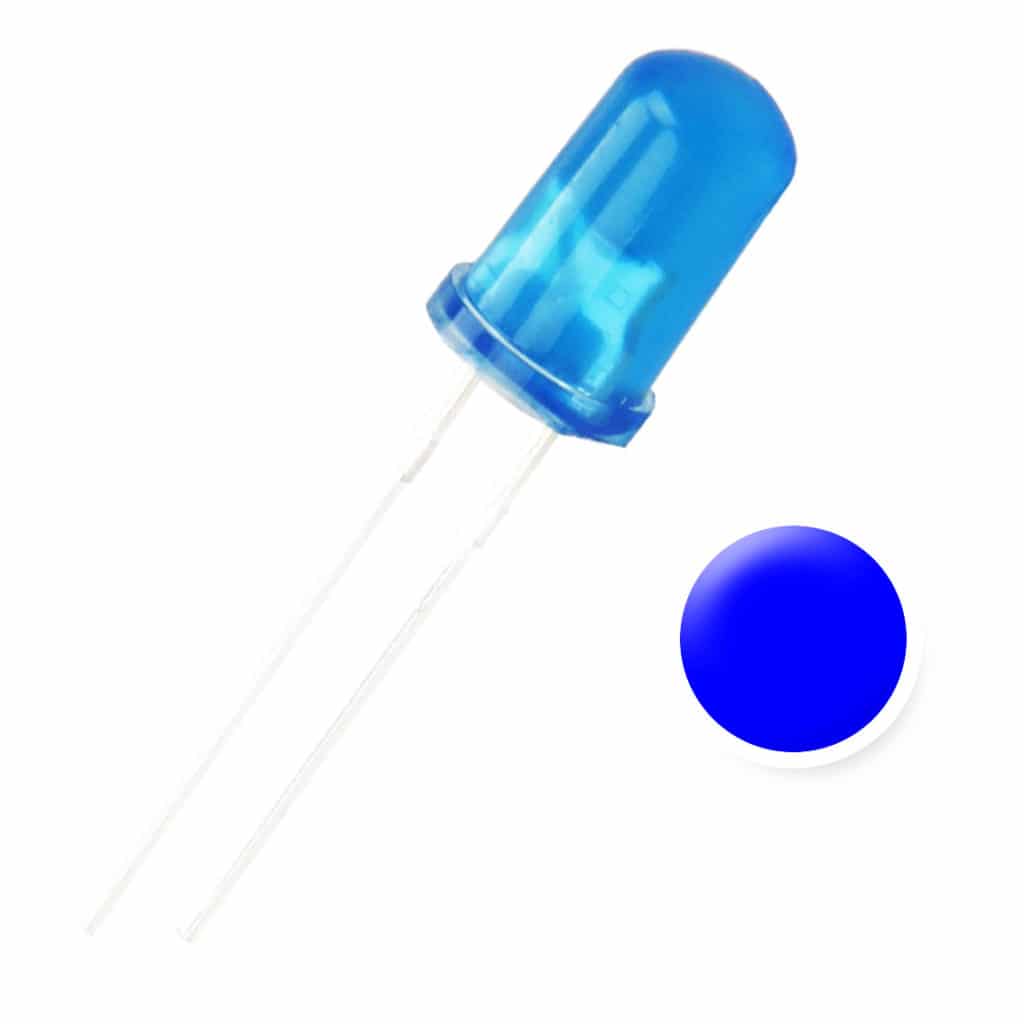
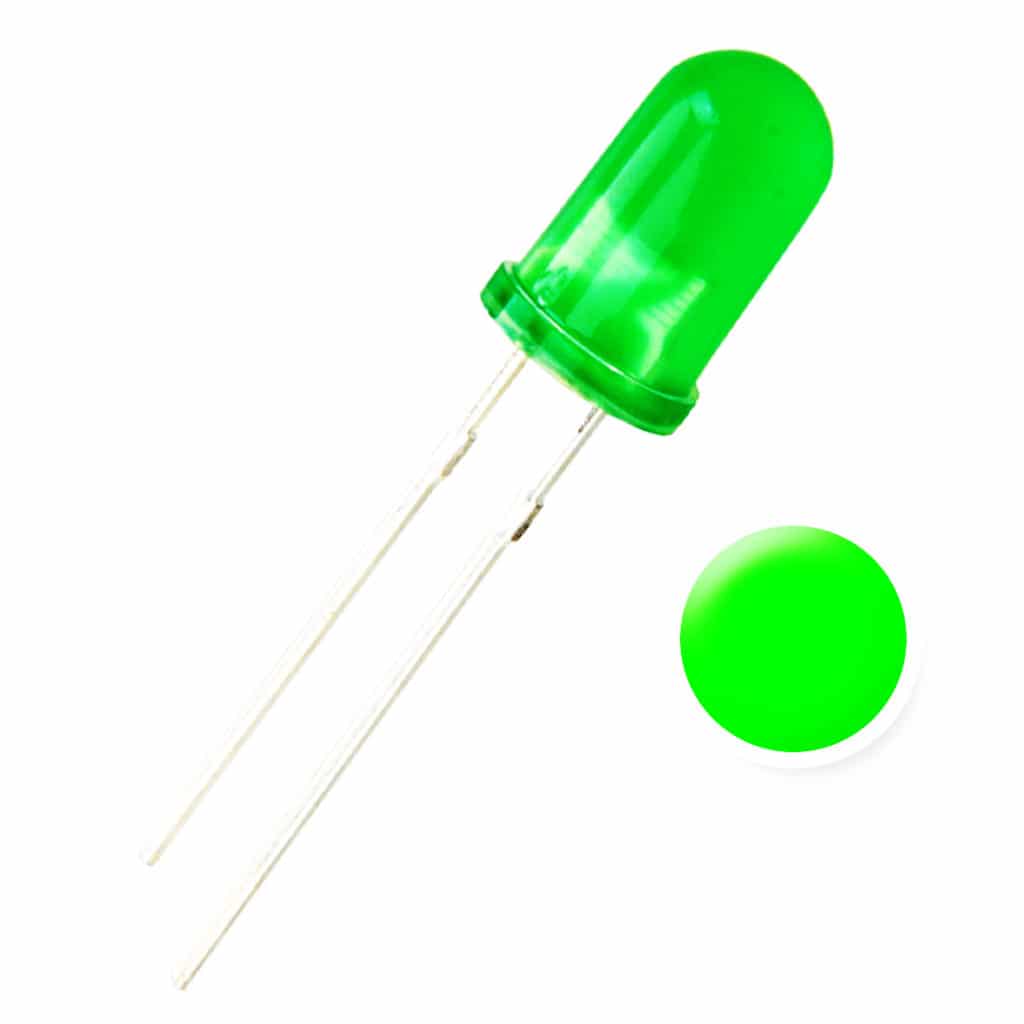
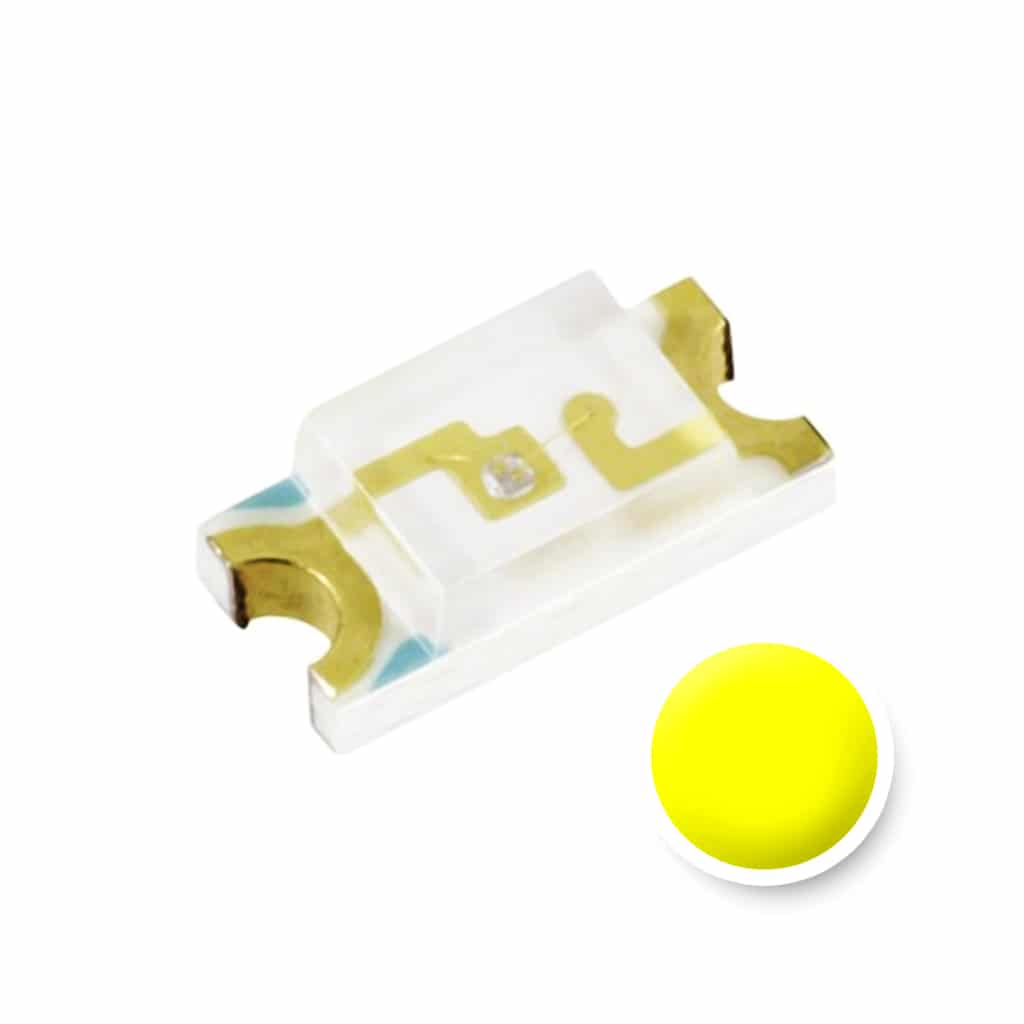
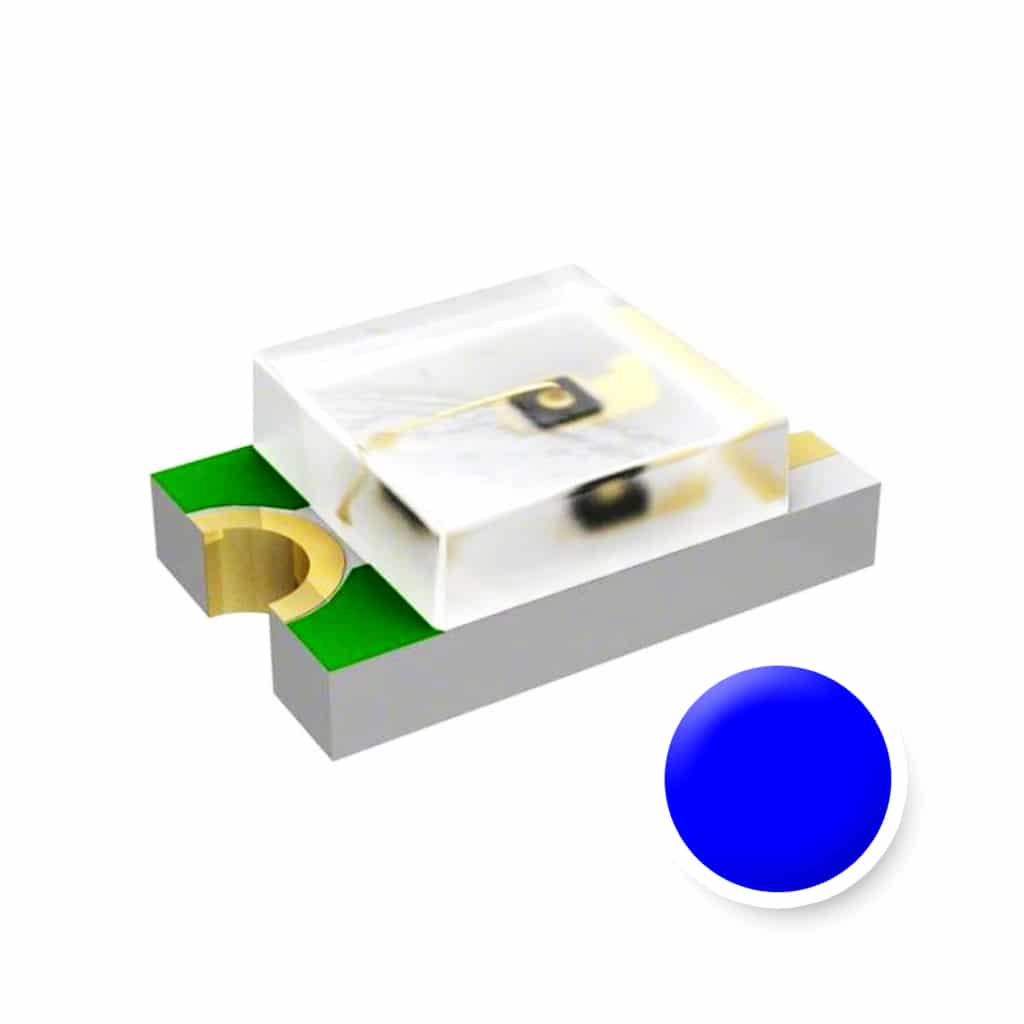
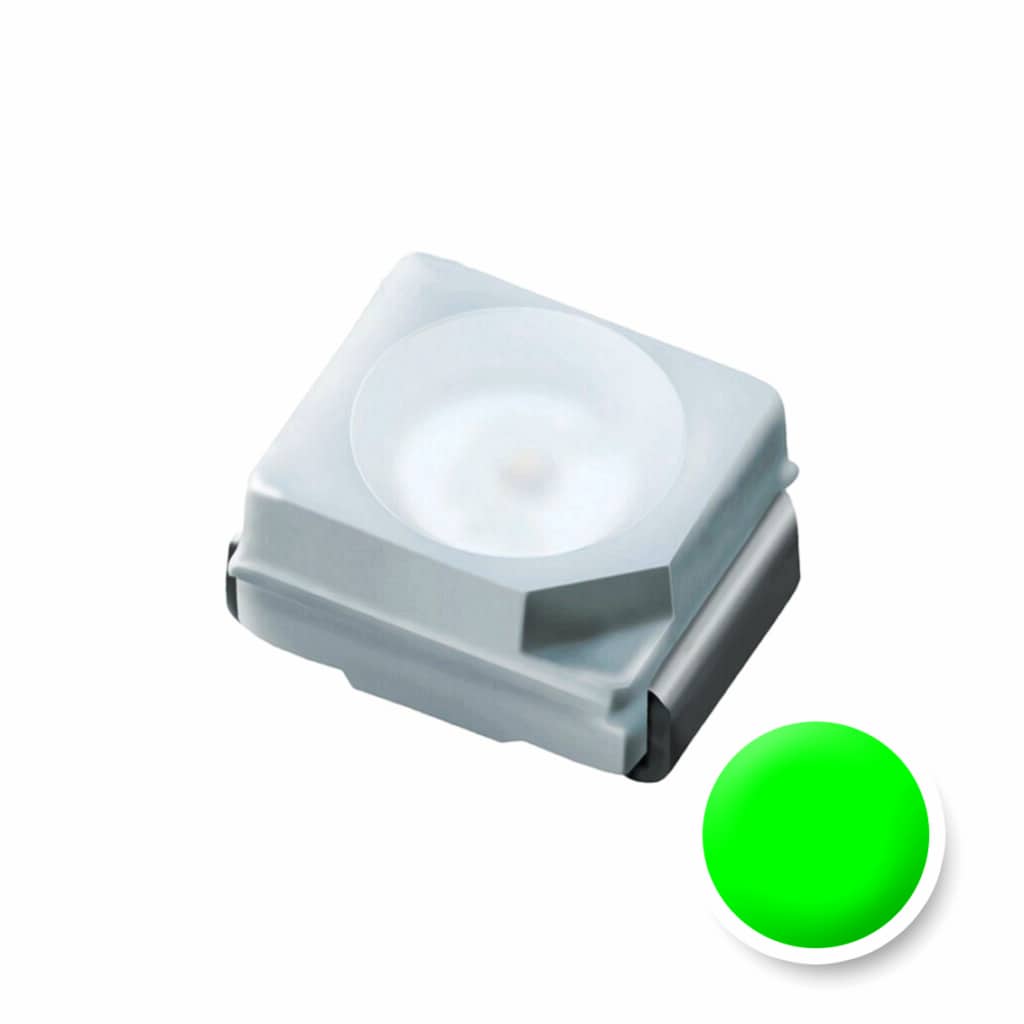
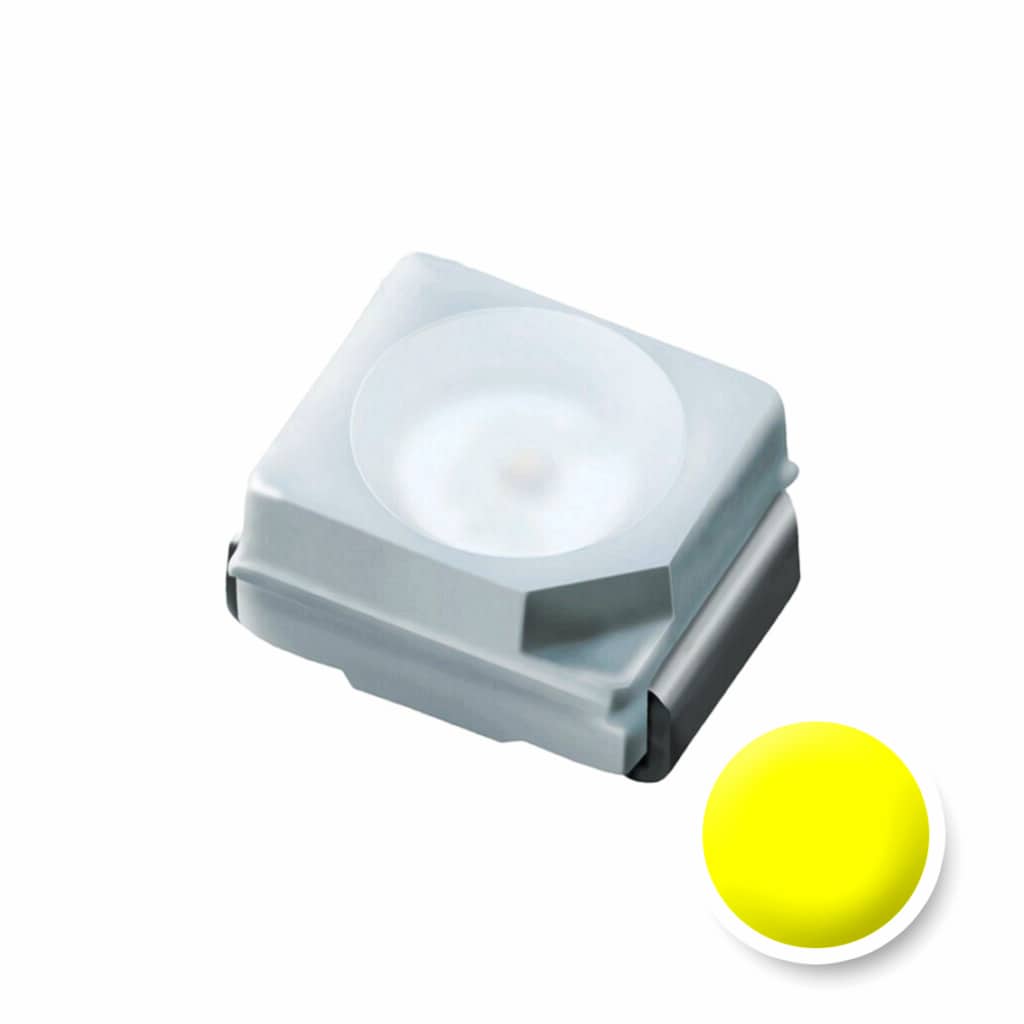
Color is one of the most important characteristics of an LED. However, it’s not just about color; the forward voltage drop of an LED is also affected by this property. Different radiated colors come from different semiconductor materials, each having its own forward voltage characteristic. See the table below.

LED Color TypeSemiconductor MaterialForward VoltageEfficiency
Standard Green LEDGallium Phosphide (GaP) or Aluminum Gallium Indium Phosphide (AlGaInP)2.1V - 3.0VModerate
High-Brightness Green LEDIndium Gallium Nitride (InGaN)3.0V - 4.0VHigh
Standard Red LEDGallium Arsenide Phosphide (GaAsP) or Gallium Phosphide (GaP)1.6V - 2.2VModerate
High-Brightness Red LEDAluminum Gallium Indium Phosphide (AlGaInP) or Gallium Aluminum Arsenide Phosphide (GaAlAsP)1.8V - 2.5VHigh
Standard Yellow LEDGallium Arsenide Phosphide (GaAsP) or Gallium Phosphide (GaP)2.0V - 2.3VModerate
High-Brightness Yellow LEDAluminum Gallium Indium Phosphide (AlGaInP)2.1V - 2.5VHigh
Standard Blue LEDZinc Selenide (ZnSe) or Silicon Carbide (SiC)2.5V - 3.2VModerate
High-Brightness Blue LEDIndium Gallium Nitride (InGaN)3.0V - 4.0VHigh
Standard Orange LEDGallium Arsenide Phosphide (GaAsP) or Gallium Phosphide (GaP)2.0V - 2.2VModerate
High-Brightness Orange LEDAluminum Gallium Indium Phosphide (AlGaInP)2.1V - 2.5VHigh

In addition to this, each LED color can have standard or high brightness. High brightness usually uses more modern technology as it is more efficient than standard. If your LED is unusually dim despite applying the recommended current, it’s probably old stock.

LED Forward Current

LED Characterisitics Forward Current

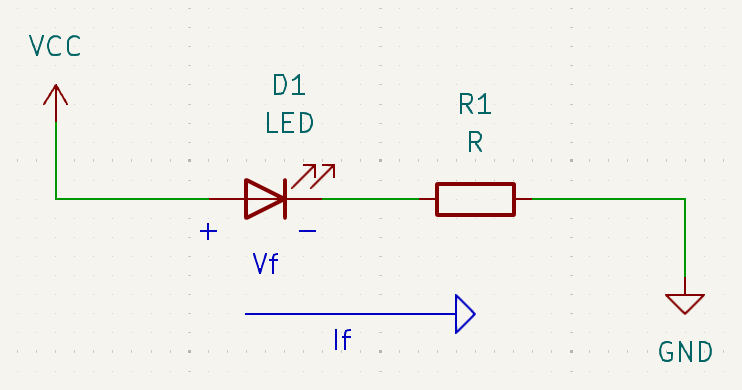
LEDs are current-driven semiconductor devices. With this, the current value is critical in determining your preferred brightness. A series resistor is used to define the current, however, the forward voltage drop also plays a major role in this. The usual maximum LED current is 20mA for optimal brightness. Below is an example computation:

LED current = (Supply VoltageLED voltage) / Series Resistor

If you have a supply voltage of 5V, a green LED voltage of 3V, and plan to use an LED current of just about 10mA :

Series Resistor = (Supply VoltageLED voltage) / LED current

Series Resistor = (5V – 3V) / 10mA

Series Resistor = 200 ohms

Series Resistor Power Rating

LED characteristic resistor power rating

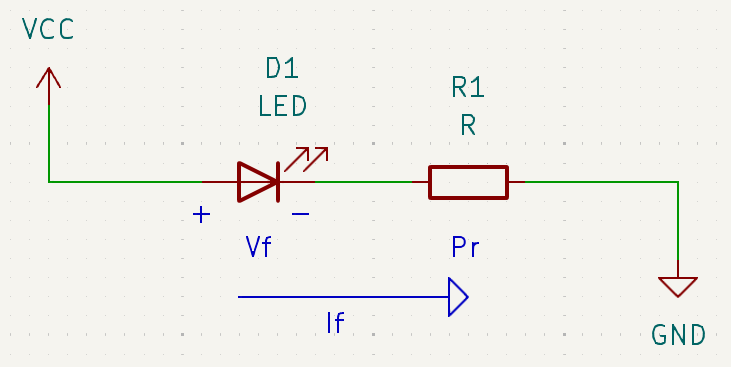
After determining your LED forward current and series resistance, you should now determine if your series resistor can handle the power. Different resistors have different maximum power dissipation that they can handle. It’s critical that you are far away from this value, or else you can damage your circuit.

Below is an example of computing the maximum power dissipation of a resistor in series with an LED:

From the computation above:

P_Resistor = I^2 * R

P_Resistor = (10mA)^2 * 200

P_Resistor = 20mW

or

P_Resistor = V^2 / R

P_Resistor = (5V – 3V)^2 / 200

P_Resistor = 20mW

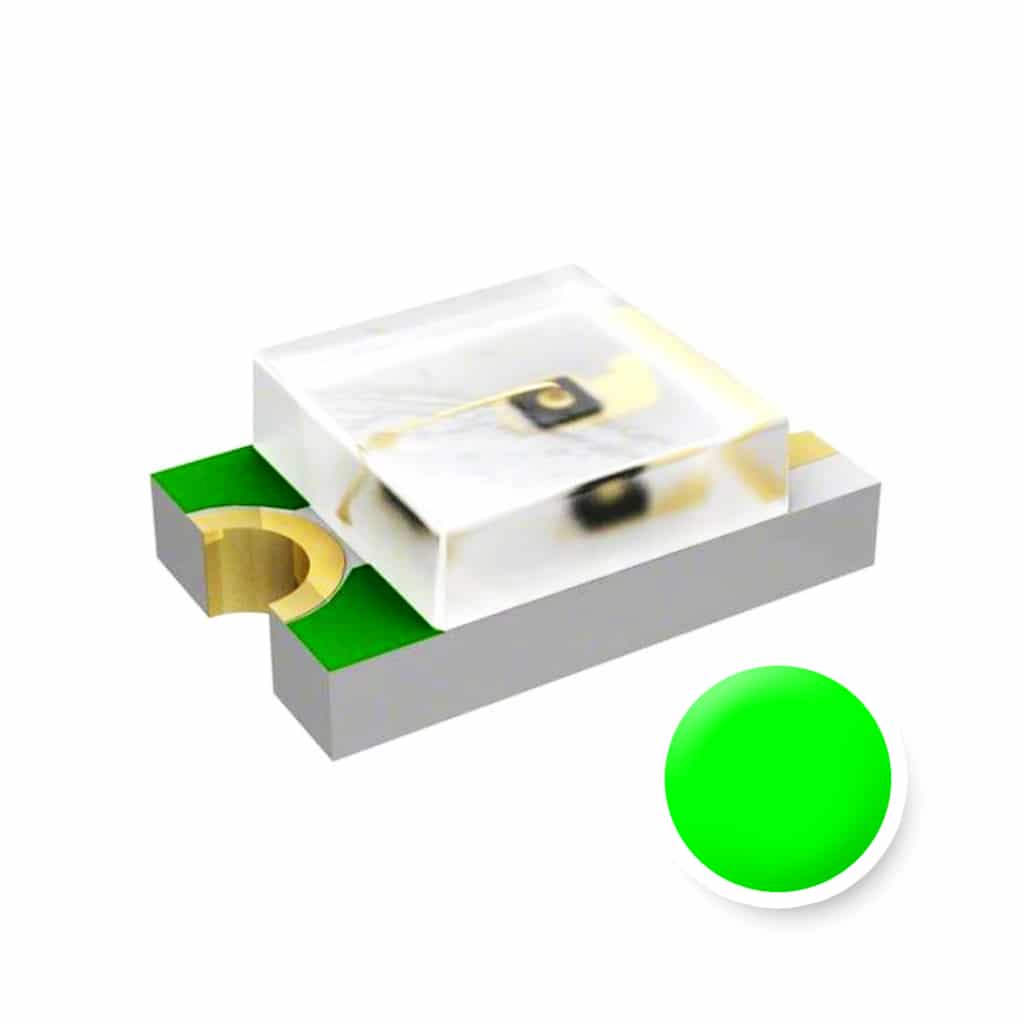
You may use any resistor that’s for away from this value. If you’re using SMD, you can use a 0603 type (max  100mW). For a through-hole component, you may use 1/8W (125mW) or 1/4W (250mW).

Conclusion

This article presented essential LED characteristics. These characteristics include LED color, forward voltage, forward current, series resistor value, and maximum power dissipation. Hope you have learned a lot in this tutorial :).

SUBSCRIBE FOR NEW POST ALERTS

Subscribe to be the first to know when we publish a new article!
List Subscriptions(Required)

POPULAR POSTS

Scroll to Top