Introduction
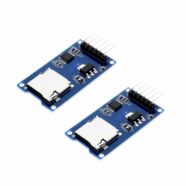
There are several serial interface modules to choose from, and each has its own unique characteristics. You may need a simple yet robust setup, such as UART, RS-485, or RS-232, that connects to a PC through USB. Or, you may need another embedded serial protocol, such as I2C or SPI, that connects directly to a chip. Whatever protocol you need, you should find a suitable adapter or interface in the shop. Additionally, you can go through the rest of this blog to find details about the various protocols.
Popular Serial Protocols
UART-TTL
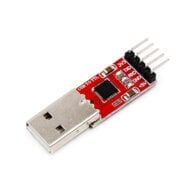
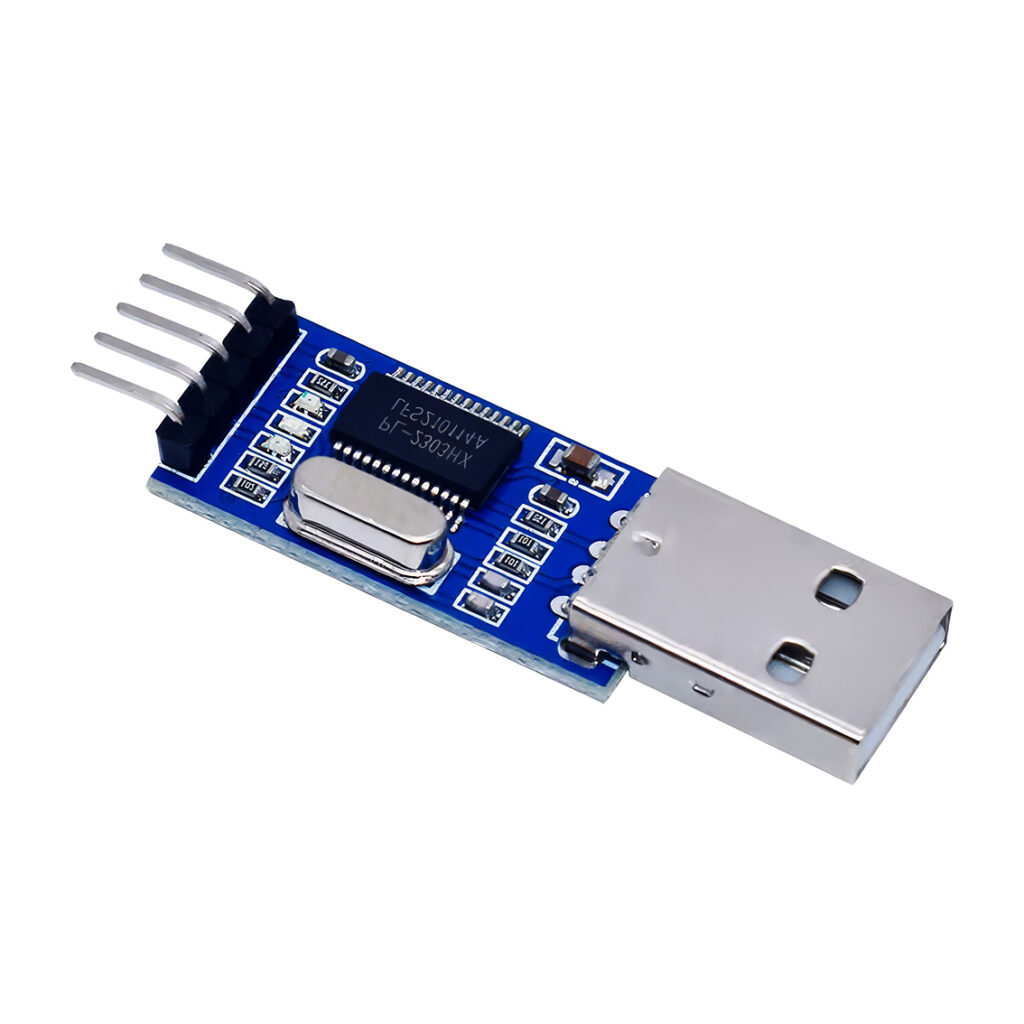
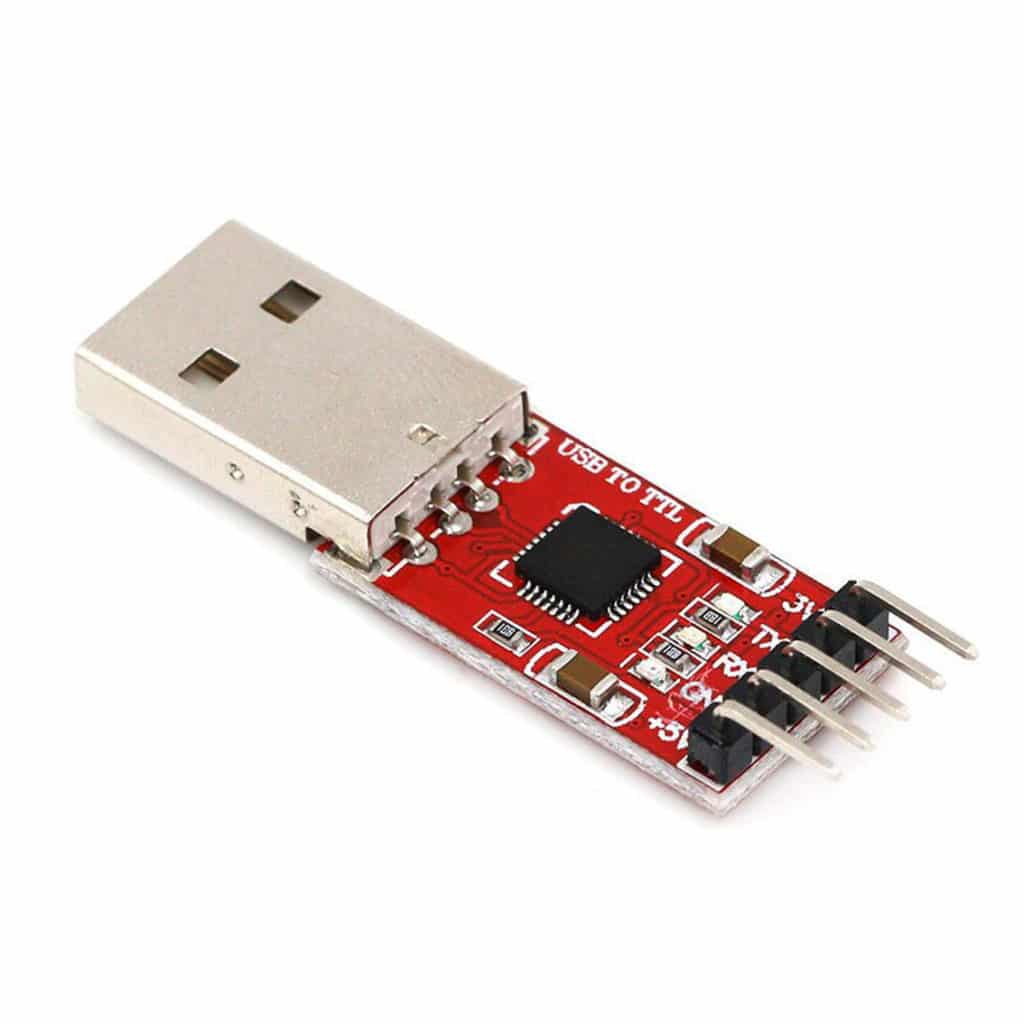
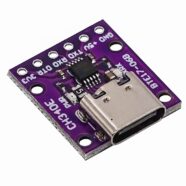
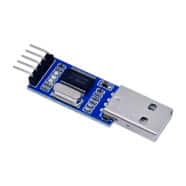
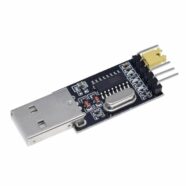
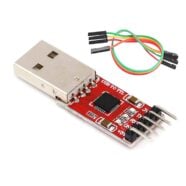
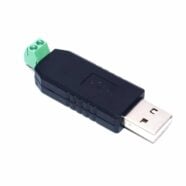
UART stands for Universal Asynchronous Receiver/Transmitter. As its name implies, it is an asynchronous serial interface with no clock line needed. TTL stands for transistor-transistor logic and has low voltage characteristics (5V/3.3V) – perfect for inter-chip communication.  Timing is managed using start and stop bit states of the TX or RX line in relation to ground. This serial interface is very popular with electronic hobbyists because of its simplicity and ease of use. You’ll find UART interfaces commonly in ICs, MCUs, Wireless transceivers, etc. Before, UART interfaces could also be found on PCs/Laptops; however, they were replaced by USB. If you need to control an IC or device with your PC, there are many USB-to-UART interfaces out there as can be seen below.
RS232
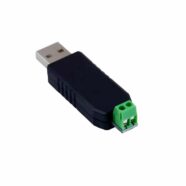
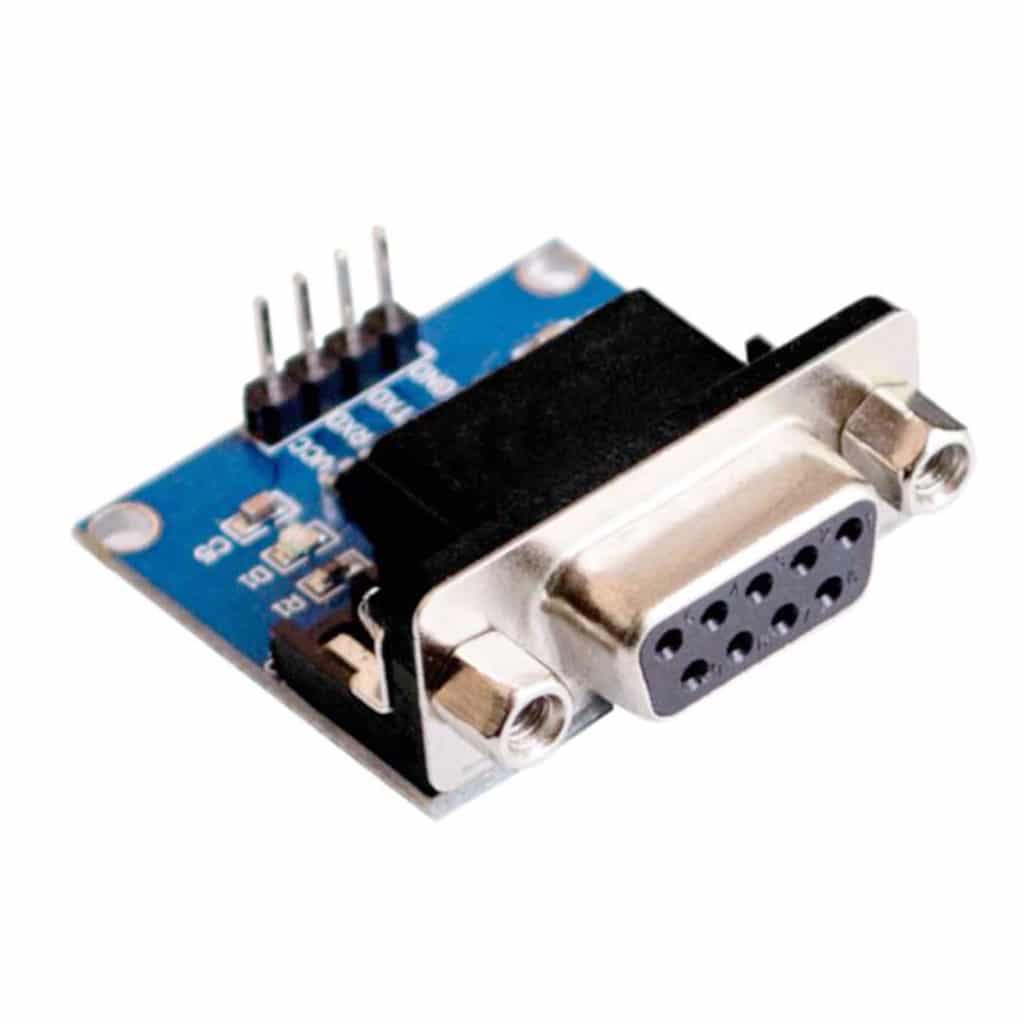
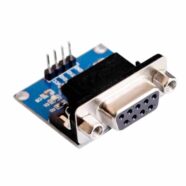
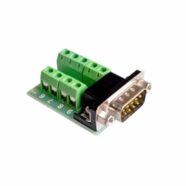
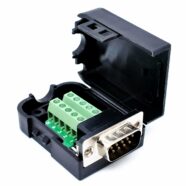
RS232 follows the UART protocol, but is electrically different. RS232 is built to withstand the resistive nature of copper wires and go through longer lengths (up to 15m)  than UART-TTL. With this, you may need higher signal voltages (in the range of 3V – 15V). This application is perfect for PC serial ports, POS terminals, kiosks, RF-ID terminals, etc. However, you may need an RS232 converter module or chip to convert RS2332 signals to standard UART-TTL.
RS485
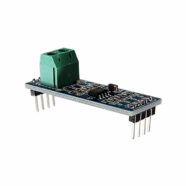
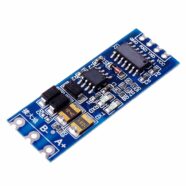
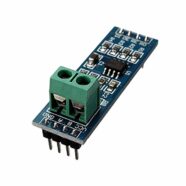
RS-485 is another variant of the UART protocol. Additionally, RS-485 is the most noise robust among the UART standards. The reason is because of its differential electrical signaling, meaning it has a balanced pair that cancels out noise. A common pinout of RS-485 is A (or D-), B (or D+), and GND. The voltage between these signals is very low (commonly, balanced +/-1.5V). With this, RS-485 can traverse longer lengths of about 1200m (at low speed). For short distances, it can go as fast as 10 Mbps due to its differential signaling nature. There are RS-485 module converters available at the shop.
SPI (Serial Peripheral Interface)
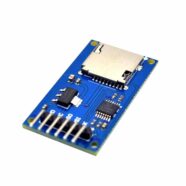
SPI is a 4-wire serial protocol, usually faster than UART and I2C. The four wires consist of the serial cock (SCK), serial data in (MISO), serial data out (MOSI), and chip select (CS) lines. SPI is an example of a synchronous serial protocol (where serial data is extracted using a clock as a reference). SPI speeds can go up to 50 MHz if the hardware allows it to.
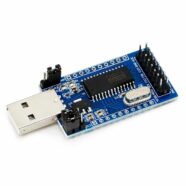
You can see SPI interfaces in various ICs, MCUs, stand-alone ADCs, wireless or network transceivers, etc. Advanced forms of SPI are Quad and Octal SPI that have additional data lines for faster throughput. There are SPI module converters you can find in the shop.
I2C (Inter-Integrated Circuit)
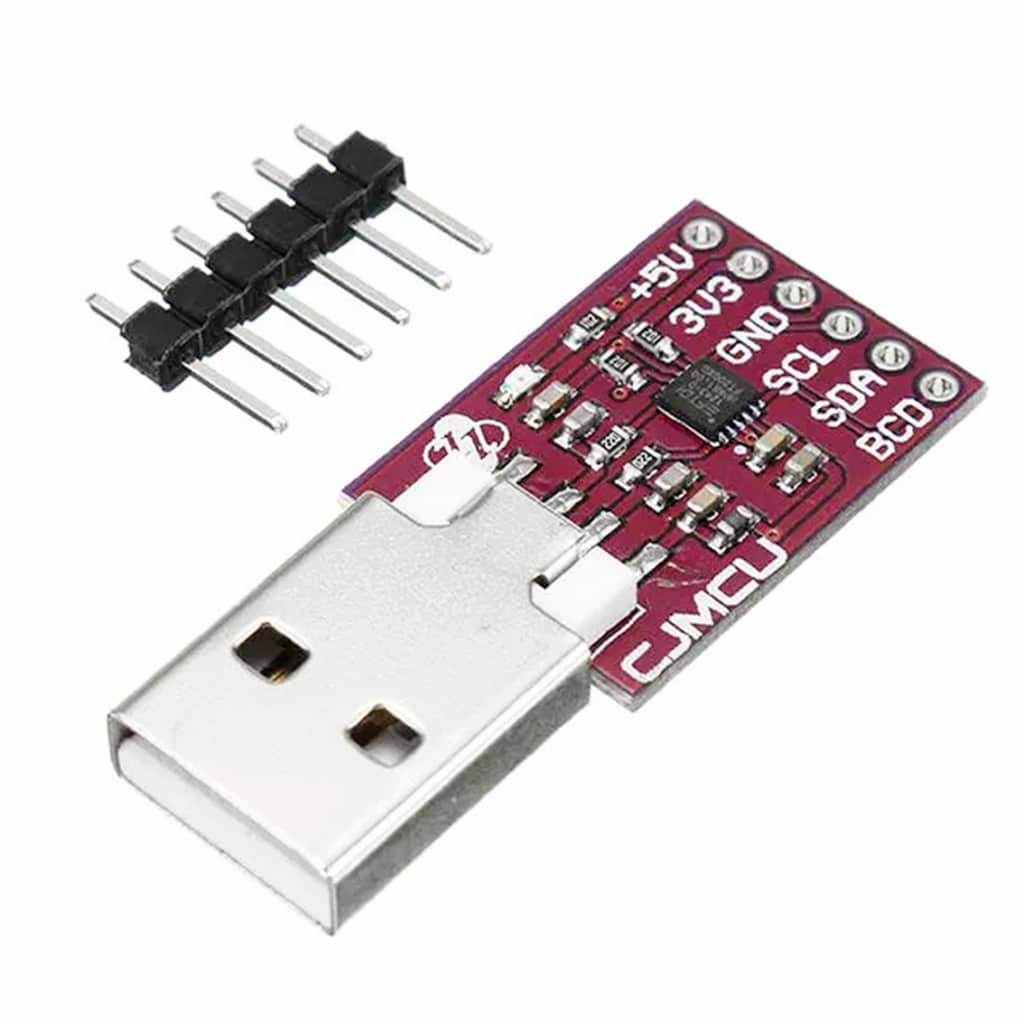
If you’re into fewer interface lines with medium speed on your chips, you could opt for using I2C. As its name implies, I2C is suited for inter-chip communication. I2C only requires two lines to communicate: serial clock (SCL) and serial data (SDA). I2C is a synchronous serial interface as it relies on SCL for correct timing and data transfers.
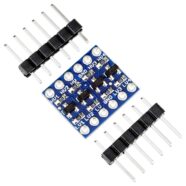
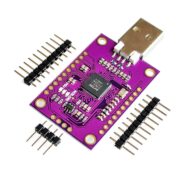
Note that, usually, I2C needs pull-up resistors as it works on open-collector or open-drain logic. I2C is reserved for short inter-IC communication distances (such as in a PCB) and cannot go beyond longer distances. Its usual application includes IC-to-IC communications and sensor readings. You can find I2C serial converter modules in the shop:
-
Adapters / Interface
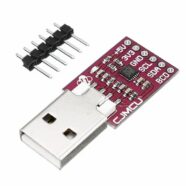
CJMCU-200 FT200XD USB to I2C Bridge Module
$34.95Original price was: $34.95.$30.95Current price is: $30.95.
USB
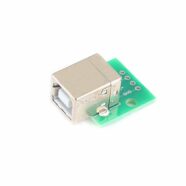
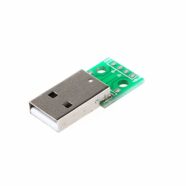
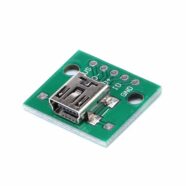
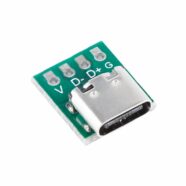
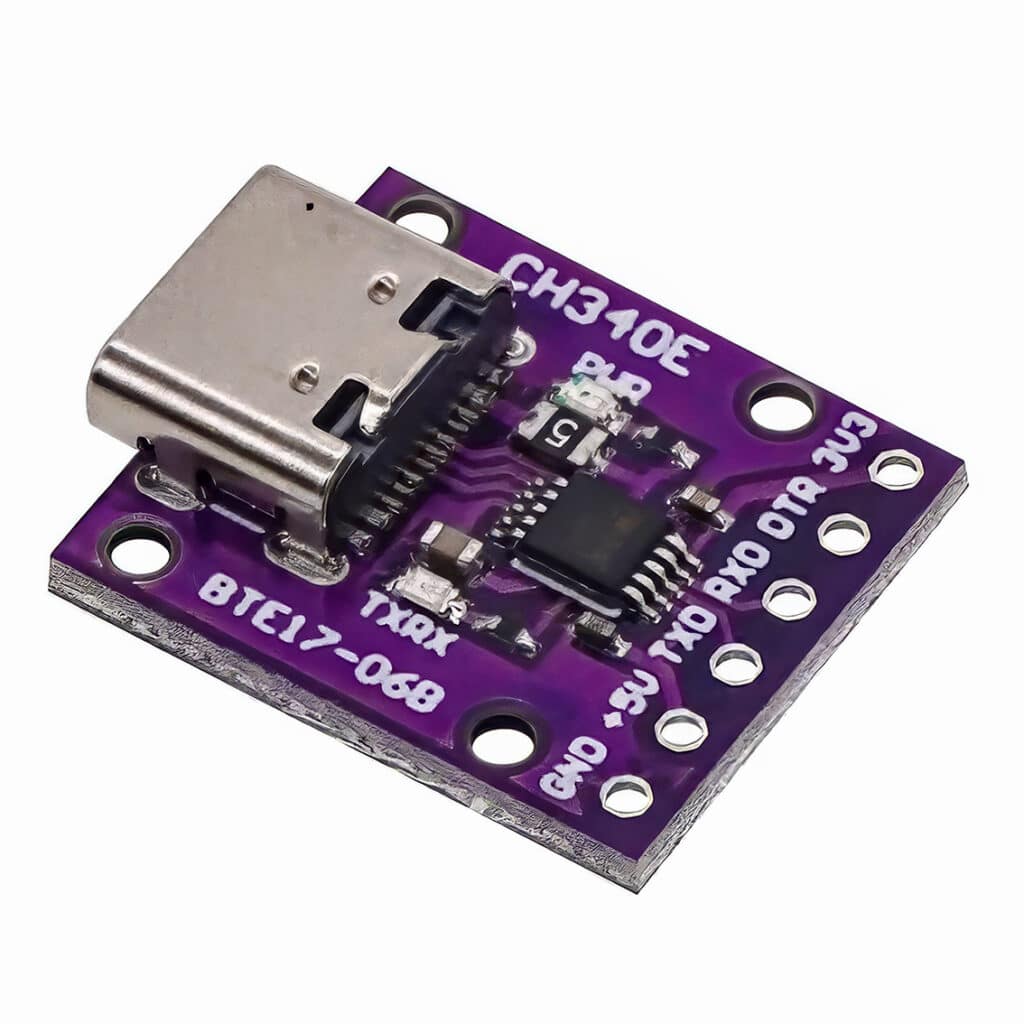
The USB serial protocol is a widely adopted communication standard that bridges modern USB interfaces with legacy serial devices, enabling seamless data exchange between microcontrollers, sensors, and host systems. At its core, USB serial emulates traditional UART communication over USB, allowing embedded developers to maintain compatibility with serial workflows while benefiting from USB’s plug-and-play convenience and higher data rates.
USB serial offers a reliable and scalable solution for debugging, firmware flashing, and real-time data logging across a wide range of platforms.
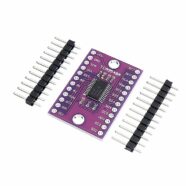
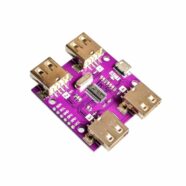
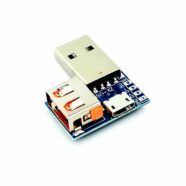
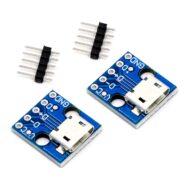
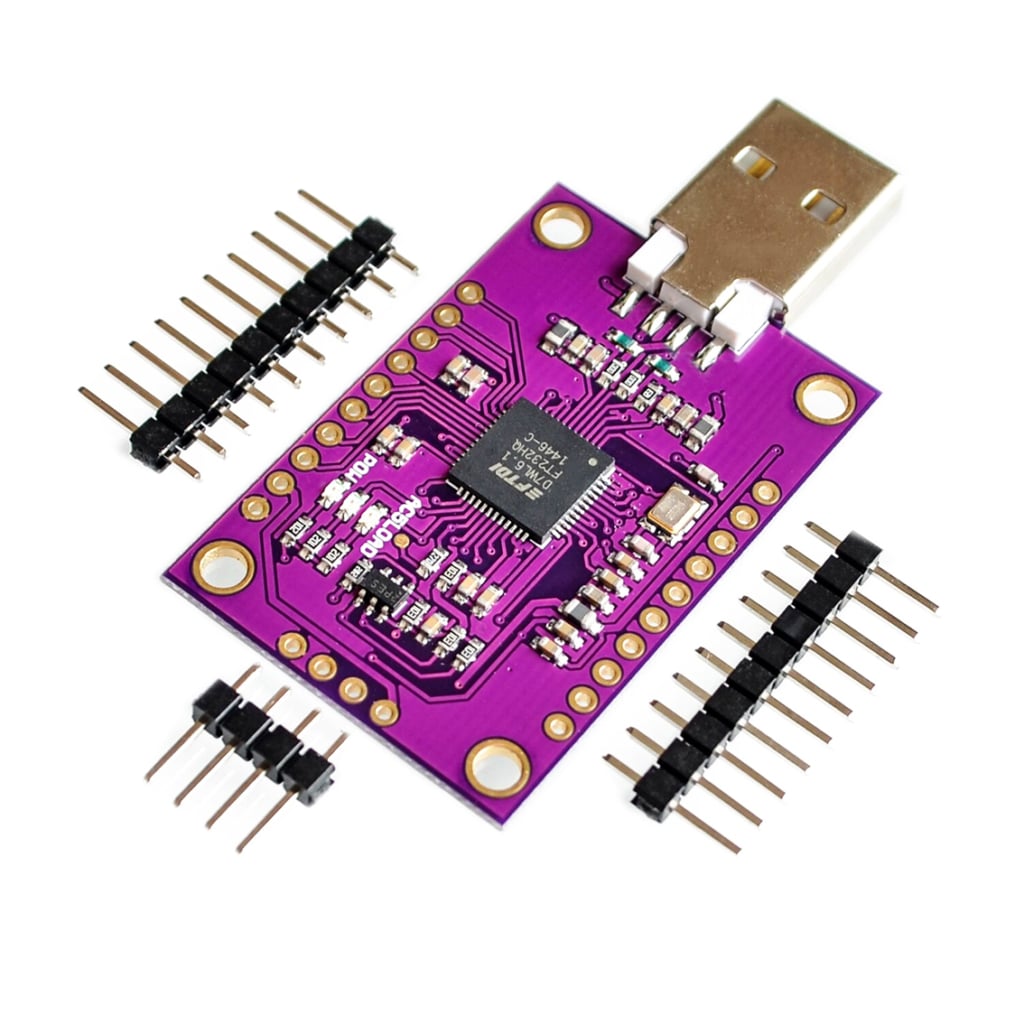
You can find many USB serial interface adapters and even a controller hub in the shop to suit your own USB interface needs.
-
Adapters / Interface
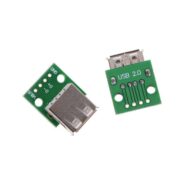
USB C Adapter Breakout Board – Pack of 2
$14.95Original price was: $14.95.$13.95Current price is: $13.95.